Introduction
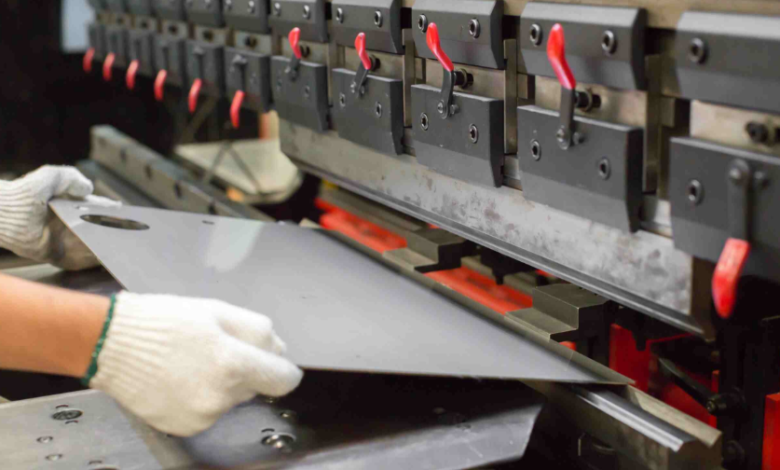
Sheet metal fabrication is a core process across industries like automotive, aerospace, and construction. Accurate bending of metal sheets is essential for creating precise components while reducing material waste. Among the techniques available, air bending performed on a press brake air bending offers a flexible and efficient method to achieve high-quality results. This article explores the principles, advantages, and applications of press brake air bending in modern manufacturing.
Principles of Press Brake Air Bending
Air bending is a method in which the sheet metal does not fully conform to the shape of the die. Instead, the bend angle is determined by the ram’s depth of penetration. This reduces the force required and allows a single die to produce multiple angles. The technique is applicable to various metals, including steel, aluminum, and copper, making it suitable for a wide range of industrial applications.
Advantages of Air Bending
- Flexibility: Multiple bend angles are possible with the same die, minimizing tooling costs.
- Lower Force Requirements: Less tonnage is needed compared to bottoming or coining methods.
- Reduced Tool Wear: Limited contact with the metal prolongs die life.
- Material Versatility: Efficiently bends different alloys and thicknesses.
- Precision Control: Adjustable depth allows for consistent angles across batches.
These advantages make press brake air bending a preferred technique for manufacturers aiming for efficiency and accuracy.
Industrial Applications
Press brake air bending is widely used in different sectors due to its adaptability and precision.
Automotive Industry
In automotive manufacturing, air bending helps create body panels, brackets, and structural components. The flexibility of the process allows quick adjustments to different sheet sizes and angles, which is particularly useful for prototyping and high-volume production.
Aerospace Industry
Aerospace components demand precision and strength. Air bending provides accurate bends with minimal material stress, making it ideal for producing lightweight yet durable parts that meet tight tolerances.
Construction Sector
From architectural panels to structural frameworks, press brake air bending ensures consistent bends that meet engineering specifications. Its efficiency reduces production time and material waste, benefiting large-scale construction projects.
Consumer Appliances
Household appliances, such as washing machines, refrigerators, and ovens, often require precise bent components. Air bending allows manufacturers to maintain consistent angles for casings, support brackets, and internal frames, ensuring proper assembly and long-term durability.
Factors Affecting Quality
Several elements influence the quality of bends produced with press brake air bending:
- Material Thickness: Thicker sheets need careful depth adjustment and sufficient tonnage.
- Die Selection: The die width and shape must be compatible with the material for accurate bending.
- Back Gauge Accuracy: Proper positioning is crucial for uniform angles across multiple pieces.
- Operator Skill: Experienced operators can fine-tune machine settings for optimal results.
- CNC Automation: Advanced CNC controls improve repeatability and minimize errors.
Controlling these factors ensures consistent bend quality and minimizes scrap.
See also: How Technology Enhances Modern Travel Experiences
Choosing the Right Equipment
Selecting the appropriate press brake air bending is essential for achieving the desired results:
- Tonnage Capacity: The machine should handle the thickest material planned for use.
- Number of Axes: Multi-axis machines allow precise control of complex bends.
- Control System: CNC interfaces improve setup accuracy and simplify adjustments.
- Frame Strength: A rigid frame reduces deflection and maintains bend accuracy.
- Maintenance Support: Availability of spare parts and technical support ensures smooth operation.
Investing in the right press brake enhances productivity and reduces the risk of errors.
Maintenance Best Practices
Regular maintenance is key to preserving press brake performance:
- Lubrication: Keep all moving parts well-lubricated to prevent wear.
- Inspection: Check mechanical and hydraulic components periodically.
- Calibration: Align the back gauge and ram to ensure precision.
- Software Updates: Maintain updated CNC systems for optimal performance.
- Operator Training: Skilled operators prevent mistakes and downtime.
Proper maintenance reduces production interruptions and prolongs machine lifespan.
Economic Benefits
Implementing press brake air bending offers several financial advantages:
- Reduced Material Waste: Accurate bends minimize scrap.
- Lower Energy Usage: Less tonnage requirement reduces power consumption.
- Faster Production: Quick setups and adjustable angles increase throughput.
- Longer Tool Life: Minimal die contact extends the lifespan of tooling.
These factors make air bending an efficient and cost-effective metal fabrication method.
Emerging Trends
The industry continues to evolve with technological advancements:
- CNC Improvements: Adaptive bending systems increase precision and efficiency.
- Robotic Integration: Automated handling systems boost productivity and safety.
- Hybrid Press Brakes: Energy-efficient designs reduce operational costs.
- Predictive Maintenance: Sensors allow early detection of issues to prevent downtime.
Adopting these trends ensures that press brake air bending remains relevant in modern manufacturing.
Conclusion
Press brake air bending is a versatile, efficient, and precise method for shaping sheet metal. By understanding its principles, selecting suitable equipment, and following best practices, manufacturers can achieve high-quality bends while minimizing waste and production costs. The continued evolution of CNC controls and automation ensures that air bending will remain a critical technique for industries requiring precision, flexibility, and cost-effective production.