Introduction
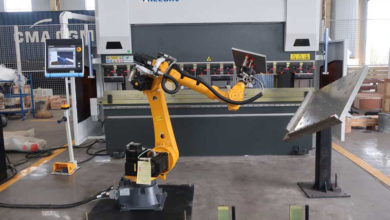
In the manufacturing world, achieving accuracy in metal bending plays a vital role in ensuring high-quality components. Precision and repeatability are the foundation of modern sheet metal fabrication, where press brakes are among the most essential machines. One of the most important tools for ensuring accuracy during bending operations is the press brake bending chart metric. It acts as a reference guide that helps fabricators determine the right settings and tonnage required for various bending jobs.
Importance of Accurate Bending in Manufacturing
The accuracy of a bend influences not only the structural integrity of the final product but also the assembly process that follows. Inconsistent angles or inaccurate bends can cause misalignment, leading to production delays and material waste. By relying on data from a press brake bending chart metric, manufacturers can minimize such errors and ensure each bend meets the desired specifications. This data-driven approach improves production efficiency and consistency.
Understanding the Concept of a Bending Chart
A bending chart is a reference table that provides key information for operators. It outlines factors such as the thickness of the metal sheet, die opening, punch radius, and the required bending force. The metric version of this chart allows users in regions using the metric system to measure with millimeters and kilograms rather than inches and tons. By using this information, operators can calculate the right tonnage and select appropriate tooling for a specific bend.
See also: Must-Watch Stocks for Tech Investors
How the Chart Enhances Accuracy and Efficiency
The press brake bending chart metric metric helps bridge the gap between operator experience and mechanical precision. It simplifies the decision-making process by providing pre-calculated data. Instead of estimating tonnage or tool size through trial and error, the chart allows for immediate and accurate setup. This results in faster production, reduced machine wear, and lower operational costs.
Moreover, it ensures the operator maintains safety by preventing overloading the machine, which can lead to damage or accidents. For high-volume production environments, these advantages significantly improve overall workflow.
Key Parameters Displayed in a Bending Chart
When analyzing a press brake bending chart metric, several parameters are commonly presented. Understanding these details helps operators interpret the data correctly:
- Material Thickness (t): Indicates the sheet thickness in millimeters.
- Die Opening (V): Refers to the width of the die opening, which affects bend angle and required tonnage.
- Bend Radius (R): The internal radius formed after bending, determined by punch tip geometry.
- Bending Force (T): The calculated tonnage needed per meter of bending length.
- Material Type: Different materials, such as mild steel, stainless steel, or aluminum, require different bending forces.
Each of these values contributes to accurate bend formation, ensuring the metal achieves the correct shape without cracks or distortions.
Using the Chart for Tool Selection
Tool selection is a critical part of any bending operation. The chart helps determine which die opening and punch radius combination suits a specific material thickness. For example, thin sheets require narrow dies and sharp punches, while thicker sheets need wider dies and larger punch radii. The press brake bending chart metric simplifies this process by providing a visual correlation between these factors.
By following the chart, operators can easily choose tools that produce the correct bend angle while maintaining the required inner radius. This not only improves accuracy but also extends the lifespan of the tools and the press brake machine.
Role of Material Properties in Bending Calculations
Material properties greatly affect the outcome of a bend. Metals differ in yield strength, elasticity, and hardness. A chart provides values based on standard materials such as mild steel, but when working with harder alloys like stainless steel, adjustments must be made. The press brake bending chart metric accounts for these differences by recommending multiplication factors to adjust the required tonnage.
For instance, bending stainless steel may require up to 1.5 times the force of mild steel for the same sheet thickness. This ensures that operators can predict machine behavior accurately, reducing the risk of tool failure or incomplete bends.
Advantages of Using a Metric-Based Chart
A metric-based chart offers precision and simplicity in measurement. It aligns with the global manufacturing standard followed in most regions, reducing confusion caused by conversions between inches and millimeters. The use of metric units ensures seamless integration with other engineering documentation, CAD drawings, and CNC programming data.
Additionally, metric charts are especially beneficial in international production setups, where consistent measurement systems prevent errors between teams working in different locations.
Common Mistakes to Avoid When Referring to the Chart
While the press brake bending chart metric provides valuable data, incorrect interpretation can lead to suboptimal results. Common errors include:
- Misreading material thickness or using incorrect units.
- Selecting a die opening too narrow or too wide for the given thickness.
- Ignoring material hardness variations.
- Overestimating tonnage requirements, which can cause machine strain.
To prevent these issues, operators should double-check measurements and confirm tool compatibility with machine capacity.
Practical Applications in the Industry
The chart is widely used in industries such as automotive, aerospace, construction, and custom fabrication. For instance, when manufacturing car panels, consistent bends are vital for alignment and aerodynamics. Similarly, in aerospace components, even a small deviation in bend angle can affect performance. By using accurate data from the press brake bending chart metric, such precision requirements are met effectively.
Conclusion
Precision in bending operations is a hallmark of advanced metal fabrication. The press brake bending chart metric plays a crucial role in achieving this precision by providing reliable reference data for tonnage, die size, and tool selection. It bridges the gap between machine capability and operator expertise, ensuring consistent, safe, and efficient bending results.
By integrating this chart into daily operations, manufacturers can reduce material waste, enhance productivity, and maintain high-quality standards in every product they produce. In the evolving field of metal fabrication, accurate bending supported by data-driven tools like this chart remains an indispensable part of industrial excellence.